The Weekend I Didn't Scan Anything Properly
NOTES FROM AN ANTIMEMOIR
One of the biggest advances in my family research project came from doing something unprofessional.
I photographed my grandmother’s antique albums with my iPhone one long holiday weekend. Didn’t even change out of my pajamas.
I had always imagined I would scan everything properly first. High resolution images, no distortion or shadows, consistent file names. It was such a production I never started.
My iPhone lowered the bar. I could do this.
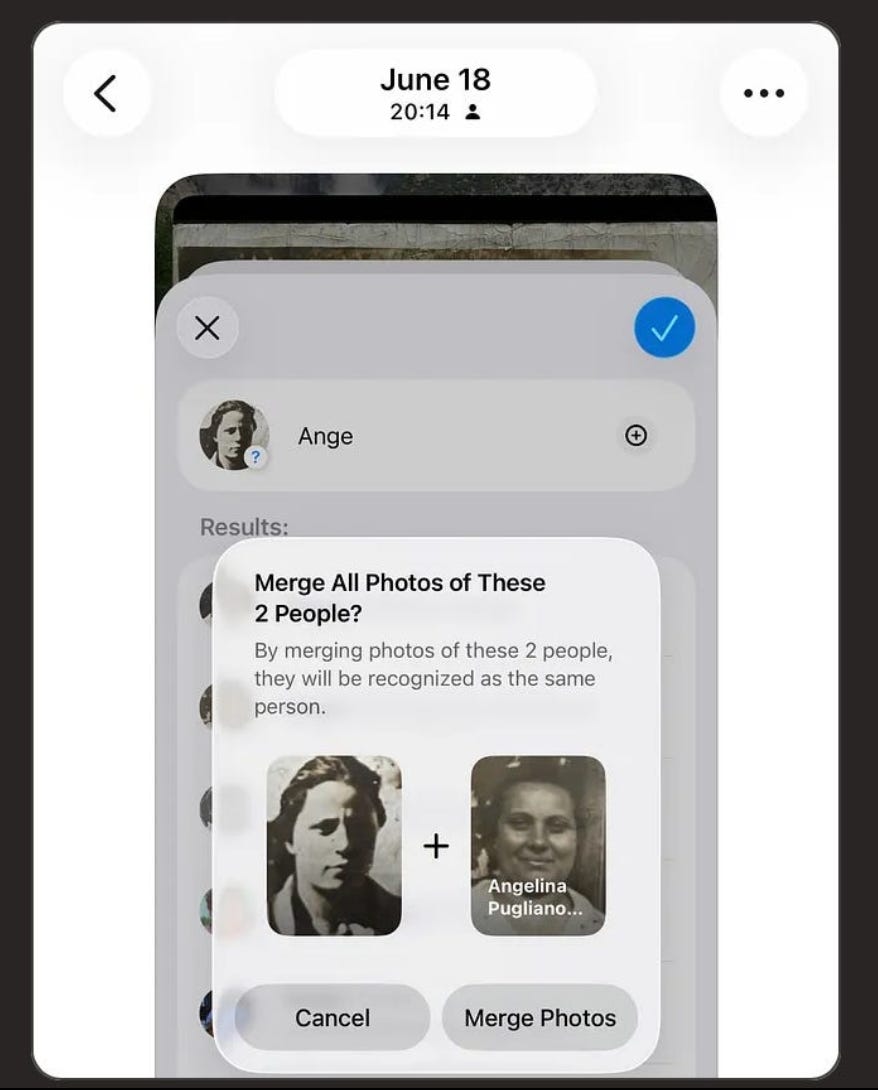
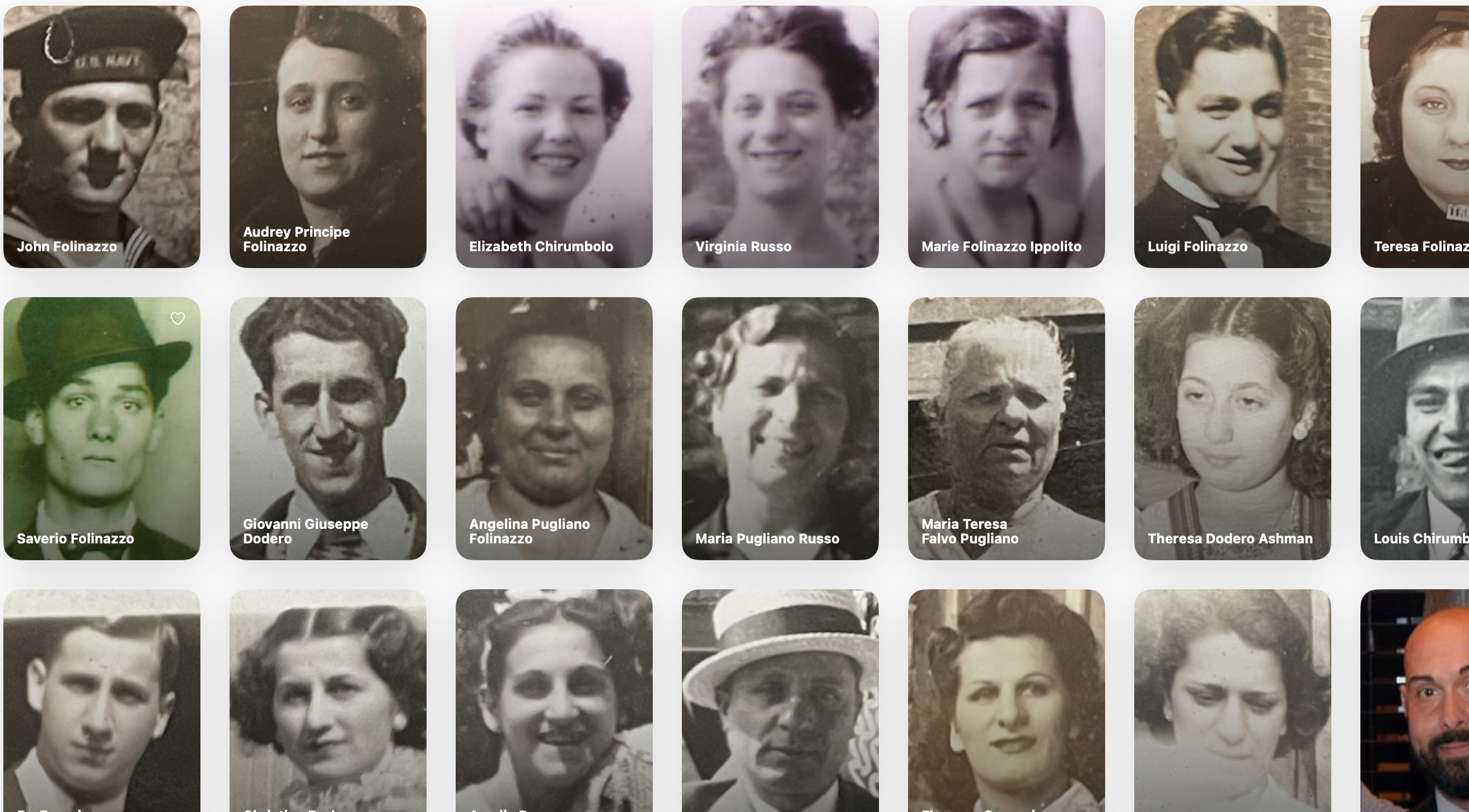
Once the photographs were in Apple Photos, I could actually use them. I enlarged faces, sorted pictures, compared people across decades and experimented with facial recognition. My first cousin’s square face turned up again in the cheekbones of my great grandfather I’d never met.
Meanwhile the family tree was stretching backward, sometimes eight or ten generations. The records were producing names, my albums supplying faces.
People in my grandmother’s albums started acquiring places in the tree. Names on the tree started acquiring faces. I became familiar enough with some people to spot them before checking the caption.
Facial recognition sometimes helped suggest a match. But it was my eye that got better. I could spot errors in my grandmother’s captions from 1933. That wasn’t her brother Johnny, it was her brother Frankie!
None of this began with the pristine digital archive I had imagined. A long weekend in my pajamas with my cellphone jumpstarted my ease with these images.
I figured I’d have to re-take a lot of them to capture more detail or something.
But no. They were good enough to keep looking.
For the last twenty years, I’ve probably studied more faces on screens than anywhere else: avatars, profile pictures, cropped heads in little squares. The family I mostly did not know fit well into that sea of digital faces, morphing into familiar faces and then back again.
Looking at them there, in my hand, is how I started to learn their faces.